

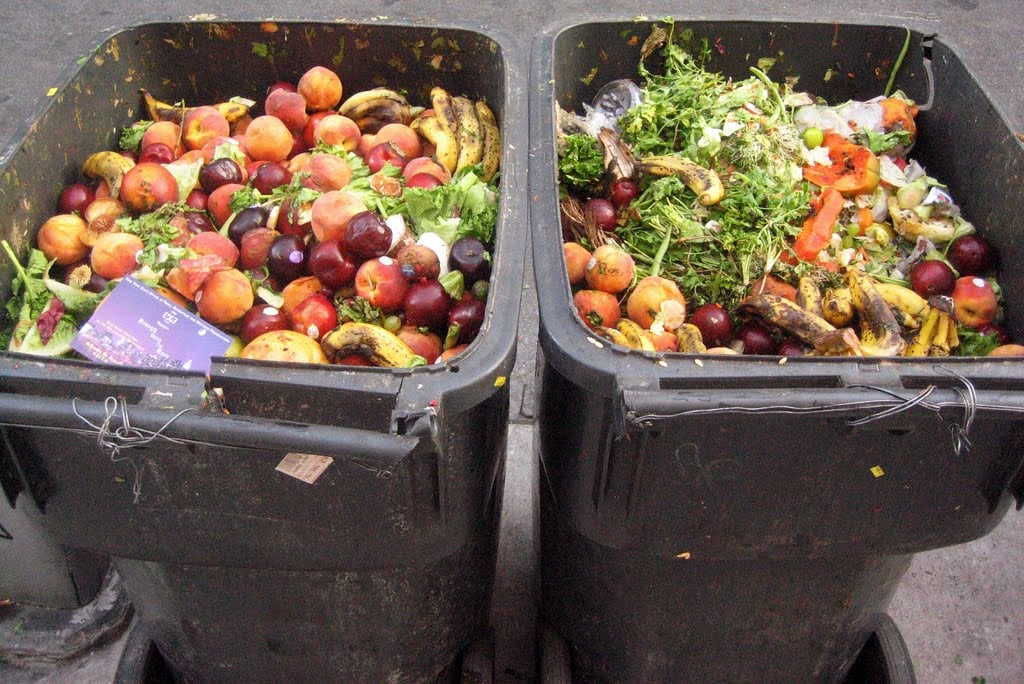
Food waste law in 2026 is shifting from voluntary pledges to binding requirements. Spain, France, Japan, and South Korea already require food businesses to measure, separate, or divert food waste by law. Singapore added mandatory segregation in 2024, and New South Wales started enforcing food waste collection for hospitality in July 2026. This guide breaks down what's required, where, and what's likely coming next for hotels, restaurants, and caterers.
Key facts
- The world wasted an estimated 1.05 billion tonnes of food in 2022, about 19% of all food available to consumers, per the UN Environment Programme's Food Waste Index Report 2024.
- The EU's revised Waste Framework Directive (adopted September 2025) sets a binding 2030 target of a 30% per-capita cut in food waste across retail, food service, and households.
- South Korea recycles roughly 95% of its food waste, up from about 2% in the early 1990s, after a 2005 landfill ban and a nationwide pay-as-you-throw system.
- Spain's Ley 1/2025 requires every food business, hotels and restaurants included, to run a food waste prevention plan with an active measurement system, enforceable from April 2026.
Which countries require food waste measurement by law?
A small but growing group of countries now legally require food businesses to measure what they throw away, not just estimate or reduce it.
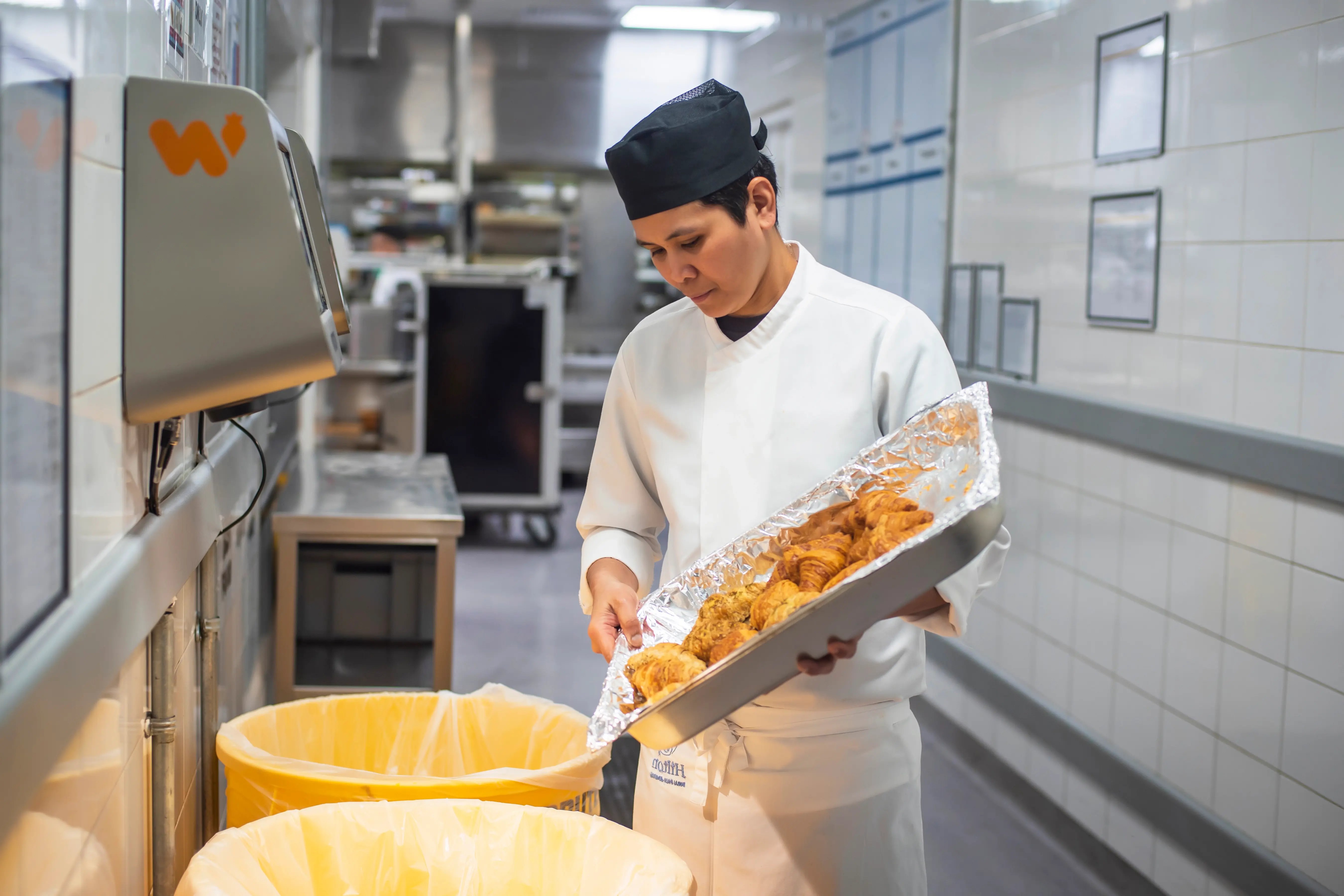
Spain's Ley 1/2025, fully enforceable from April 2026, applies to every actor in the food chain. Covered businesses need a formal prevention plan: a baseline diagnosis, quantified reduction targets, a named responsible person, and an ongoing measurement and tracking system. Penalties for deliberately destroying edible food reach €500,000, and offending businesses can be named publicly.
Japan's Food Waste Recycling Law already required businesses generating 100+ tonnes a year to report volumes and recycling rates. A December 2024 revision added a stricter requirement: covered operators must now regularly monitor and measure food waste by source, not just submit an annual total. Japan's restaurant and food-service sector carries the lowest recycling-rate target of any category, 50% by fiscal year 2029, a sign of how much harder measurement is in a working kitchen than in a factory.
Singapore has required premises generating 5+ tonnes of food waste a month (hotels, malls, large food-service operators) to segregate that waste for treatment since January 2024, enforced by the National Environment Agency under the Resource Sustainability Act.
South Korea doesn't mandate measurement directly, but its RFID-based pay-as-you-throw system achieves the same result by charging by weight at disposal, giving every household and business a built-in incentive to track what they waste.
Which countries restrict landfilling or mandate diversion?
Landfill and disposal restrictions are the most common lever globally, and they're spreading fast.
France has required source-separation of biowaste from every producer, regardless of volume, since January 2024 — a rule that touches every restaurant, hotel kitchen, and caterer in the country. The UK's Simpler Recycling rules, in force since March 2025, require nearly all businesses to separate food waste for collection. In the United States, Vermont became the first state to ban landfilling food scraps for every resident and business in 2020, while California's SB 1383 mandates organic waste collection for nearly all residents and businesses statewide. Massachusetts and New York restrict commercial food waste disposal above set generation thresholds.
In Australia, New South Wales' FOGO (food organics/garden organics) mandate starts applying to larger hospitality operators from 1 July 2026, with non-compliance penalties up to AU$500,000.
Which countries mandate food donation?
France has the world's most established donation mandate. Since 2016, large retailers over 400m² have been banned from destroying unsold edible food and required to sign donation agreements with food banks; the rule was later extended to large caterers serving 3,000+ meals a day and food companies over €50 million in revenue.
Spain's Ley 1/2025 builds donation into a strict hierarchy: businesses must donate first, then look to other uses like animal feed, with landfill or destruction as a last resort.
The United States relies on liability protection rather than a direct mandate: the Bill Emerson Good Samaritan Food Donation Act (1996) shields donors and nonprofits from liability for good-faith food donations. New York's 2022 law goes further, requiring large generators to donate edible surplus. Brazil's 2020 "Lei do Bem" mirrors the US approach, protecting good-faith donors from civil and criminal liability and legalizing donation of food near or at its expiry date if still safe to eat.
Food waste regulation by market: quick comparison
|
Country/region |
Mandatory measurement |
Landfill/disposal rule |
Donation mandate |
2030 target |
|---|---|---|---|---|
|
Spain |
Yes (Ley 1/2025, April 2026) |
Landfill as last resort |
Yes |
EU -30% per capita |
|
France |
Diagnostic for large operators |
Yes, all producers (2024) |
Yes, large retailers/caterers |
EU -30% per capita |
|
Japan |
Yes (100+ tonnes/year, 2024 revision) |
Recycling-rate targets by sector |
No |
Halve food loss by FY2030 |
|
South Korea |
De facto, via pay-as-you-throw |
Landfill ban since 2005 |
No |
~95% already recycled |
|
Singapore |
Yes, 5+ tonnes/month |
Segregation for treatment (2024) |
No |
30% diversion by 2030 |
|
UK |
No (delayed) |
Yes, Simpler Recycling (2025) |
No |
Halve food waste by 2030 |
|
USA (state-led) |
Varies by state |
Yes, in CA, VT, MA, NY |
NY, large generators |
Federal goal, non-binding |
|
Australia (NSW) |
No |
Yes, FOGO from July 2026 |
No |
Halve food waste by 2030 |
|
Germany/Italy/NL |
No (voluntary pacts) |
EU baseline only |
Italy: Legge Gadda |
EU -30% per capita |
|
Saudi Arabia/UAE |
No, tracking pilots underway |
No |
No |
-50% by 2030 |
|
Canada |
No |
No |
No |
Strategy-led, non-binding |
Frequently asked questions
Which country has the strictest food waste law for restaurants?
Spain currently has the strictest requirement, since Ley 1/2025 mandates a written prevention plan with an active measurement system for every food business, including restaurants and hotels, with fines up to €500,000 for non-compliance. France's universal biowaste separation rule and mandatory donation law for large caterers are close behind.
Is food waste reporting mandatory in the UK?
Not yet. The UK's Department for Environment, Food and Rural Affairs (Defra) has proposed mandatory food waste reporting for large businesses multiple times since 2018 but has repeatedly delayed it. Simpler Recycling, which requires food waste separation for collection, has been in force since March 2025.
What is South Korea's food waste recycling rate?
South Korea recycles roughly 95% of its food waste, one of the highest rates in the world, after introducing a landfill ban in 2005 and an RFID-based pay-as-you-throw system that charges households and businesses by weight at disposal.
Does the US have a national food waste law?
No. There's no US federal food waste law with binding requirements. The EPA and USDA have set a voluntary 2030 goal of halving food waste from a 2016 baseline. Binding rules exist at the state level, including California's SB 1383, Vermont's universal food-scrap ban, and disposal bans in Massachusetts and New York.
What is the EU's 2030 food waste target?
The EU's revised Waste Framework Directive, adopted in September 2025, sets a binding target of a 30% per-capita reduction in food waste across retail, food service, and households by 2030, plus a 10% reduction in processing and manufacturing waste, both measured against a 2021–2023 baseline.
Why this matters for hospitality now
Three patterns hold across nearly every market in this guide. Regulation is moving in one direction, from voluntary pledges toward binding targets. Donation is increasingly a legal obligation rather than a goodwill gesture, with France, Spain, the US, and Brazil all now protecting or requiring it. And the businesses best placed for what's coming are the ones already measuring what they throw away, rather than waiting for a law to force the issue.
Winnow works with hotels, caterers, and restaurant groups across all of the markets covered here, turning kitchen waste data into the kind of measured, auditable record that regulators like Spain's and Japan's are starting to require by law.
Sources and further reading
- UNEP Food Waste Index Report 2024
- European Parliament: Food waste in Europe, 2030 targets
- Spain: Ley 1/2025 (BOE)
- France: mandatory biowaste sorting (info.gouv.fr)
- UK: Simpler Recycling guidance (gov.uk)
- Japan: Food Waste Recycling Law revision (ChemLinked)
- South Korea's food waste recycling system (World Economic Forum)
- Singapore: mandatory food waste segregation (NEA)
- California SB 1383 implementation
- NSW FOGO mandate (EPA NSW)
This guide reflects publicly available policy information as of August 2026. Food waste regulation changes quickly — confirm current requirements with local authorities or legal counsel before making compliance decisions.

Ready to reduce food costs in your kitchen?
See how Winnow helps your kitchens produce the right amount. Kitchens worldwide trust it.