

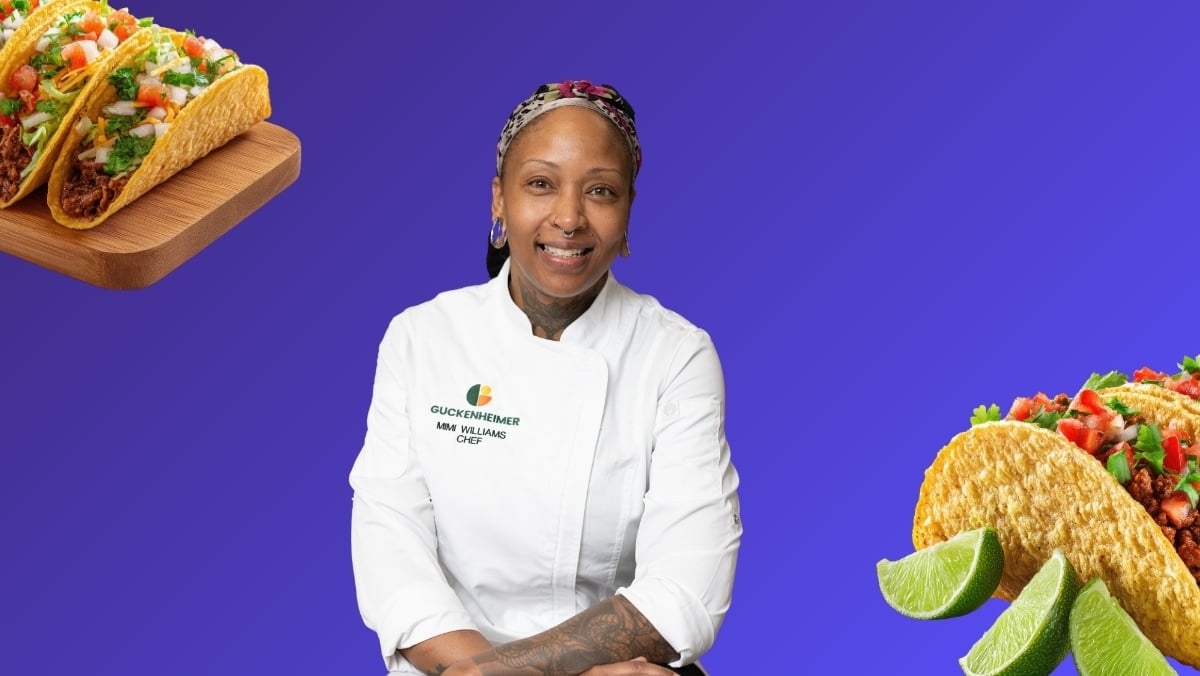
This month on Pass It On, we’re spotlighting Chef Almitra Williams, one of the top five finalists in our 100 Recipes for $100M competition. She's currently working with Guckenheimer at American Eagle in Kansas.
Growing up on 96 acres of land, she learned early that almost everything could be reused, repurposed, or transformed. Her mother turned old pillowcases into clothes, made dolls from corn silk, and found new uses for the materials around her. Today, Almitra brings that same mindset into the kitchen. Her zero-waste competition dish, a carrot pappardelle with carrot marinara, broccoli stem pesto, bread-end gremolata, and salami lardons, shows how overlooked ingredients can become something bright, seasonal, and memorable.
Read on for Almitra’s reflections on creativity, leadership, and the simple habits that can help chefs reduce food waste.
From Passion to Plate
How did your culinary journey begin? What inspired you to become a chef?
I grew up on about 96 acres of land, and we had a wonderful opportunity to use everything we raised ourselves. My mother was a huge advocate for zero waste. If she didn’t have to buy something, she would find it on the land and repurpose it. That mindset carried into the food we ate.
I asked very early on if I could be responsible for my own meals, so my mother gave me the original Betty Crocker cookbook. I worked my way through every page, learning different techniques. Eventually, my brothers started asking me what was for dinner. That was really where my culinary passion began: feeding my family and learning how to elevate food.
If you could have one final meal, what would it be?
If I was stranded on a desert island and it was my final meal, it would be tacos.
I love tacos because anything can be the filling. I’ve had incredible tacos made with walnuts. They’re versatile, creative, and probably my favourite thing to eat.
Can you walk us through the dish you entered into the competition?
My mother is part Sicilian, so I grew up eating a lot of pasta. That inspired the carrot pappardelle dish. The sauce originally came from a client who had a nightshade allergy and couldn’t eat tomatoes. We developed a bright orange sauce using carrot trimmings, herbs, onions, and garlic. It tasted like marinara, but without the tomato.
At my current location, our salad bar is one of the biggest parts of lunch, so we go through a lot of vegetables. I started paying attention to the scraps going into Winnow and thinking about what else we could do with them. The dish uses carrot in both the pasta and the sauce, bread ends for a savoury gremolata topping, salami ends for lardons, and broccoli stems turned into pesto.
Ingredients of Success
What are your key ingredients for success?
For me, it’s humility, imagination, and never losing your childlike wonder. My children remind me of that every day. I love seeing their curiosity and how excited they get by the simplest things.
At work, people joke because I get excited over a niche produce item, a new spice, or an ingredient I’ve never used before. But when you have that excitement, people can taste it in the food.
I also learned a long time ago that I will always be a student. There is always something I don’t know. What keeps the magic alive for me is discovering new ingredients and exploring cuisines from around the world.
Was there a particular moment that made you rethink how food waste is managed?
I had the opportunity to work at a women’s shelter in downtown Los Angeles, where we cooked for women who were used to eating canned goods and whatever had been donated. We brought in fresh produce, protein, fruit, and ingredients they didn’t normally have access to.
What stood out to me was the amount of food being thrown away. Some people were focused on demonstrating gourmet techniques, but I kept thinking about the chicken scraps and how they could be saved and used later. That experience completely changed the way I think about production. As chefs, so much of our job is about impressing people, but we also need to make the most of every ingredient.
Proof in the Pudding
What are you most proud of when it comes to reducing food waste?
One thing I’m most proud of is changing how my team thinks about waste. When I first started paying attention to the scraps going into Winnow, I was probably not the most popular chef. I’d hold up a piece of carrot and tell my team, “This is two dollars.”
Over time, they started to see it too. Now we pay much closer attention to how we break down vegetables, how much we produce, and what can be repurposed.
Bite-Sized Pro Tips
What is the most important tip you would give to chefs trying to reduce food waste?
Be methodical and take your time. Before you start, look at the measurements, the ingredients, and what you already have. If you don’t have eggs, can you use banana, applesauce, or something else you already have instead?
The same applies in professional kitchens. We go through a lot of chicken, and now my team saves everything they can for stock. Instead of relying on chicken base or bouillon, we make our own chicken stock.
Fuel for Creativity
Are there any books you would recommend for chefs looking to grow and stay inspired?
One of my favourite cookbooks right now is Bar Tartine: Techniques & Recipes. It teaches you how to make things from scratch, preserve ingredients, and turn items like onion skins and garlic skins into powders and salts.
For me, that kind of knowledge is powerful because it helps chefs understand what they can create before something becomes waste.
Ready to reduce food costs in your kitchen?
See how Winnow helps your kitchens produce the right amount. Kitchens worldwide trust it.