

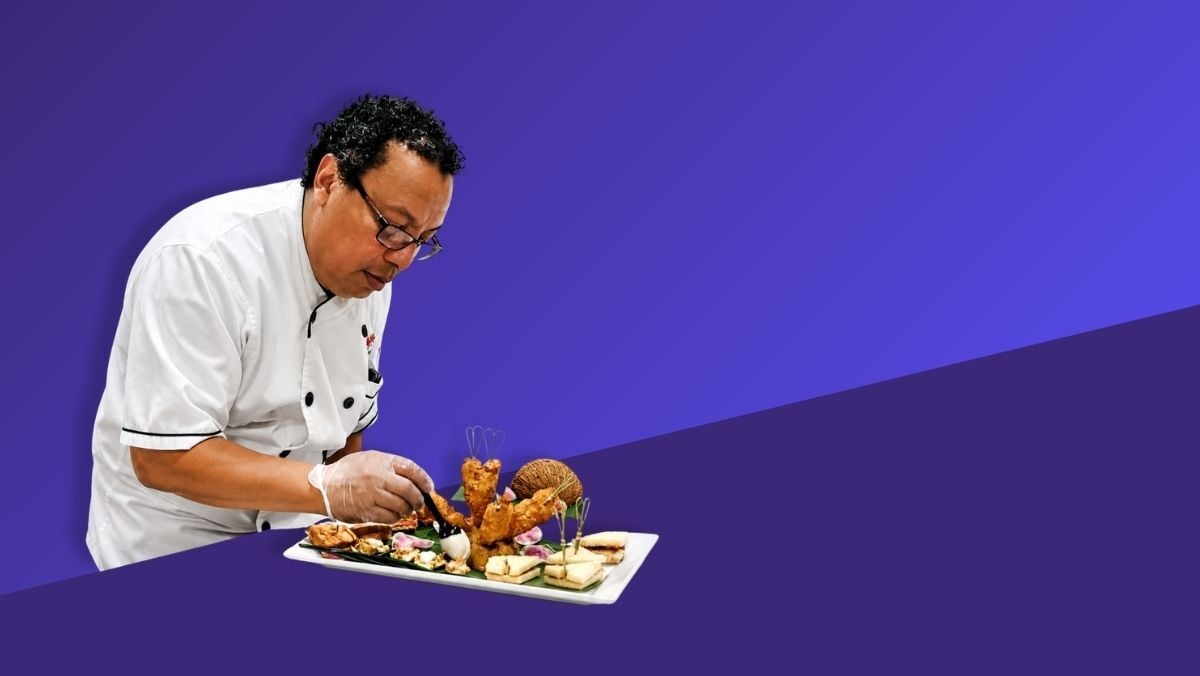
This month on Pass It On, we’re spotlighting Chef Rudy Torres, Executive Chef at Hilton Knoxville in Tennessee. With decades of experience across fine dining restaurants, hotels, and large-scale hospitality operations, Rudy has built his career around passion, honesty, and leading by example.
Today, he’s helping his team rethink food waste through better communication, smarter forecasting, and a culture where every ingredient matters. In just seven months, Rudy and his team have reduced food waste by 46%, proving that small operational changes can have a huge impact. Read on for Rudy’s reflections, leadership lessons, and practical advice for chefs looking to reduce waste in their own kitchens.
How did your culinary journey begin? What inspired you to be a chef?
I grew up in a very small town in Texas. My dad didn’t really like me being in the kitchen, but I was always there with my mom, watching everything she did. That’s where my passion for hospitality really began.
I've now been in the industry for many years. Before joining Hilton Knoxville, I moved from Texas to Tennessee to become Executive Chef at Dollywood. At first, people didn’t understand the move, but for me it was about challenging myself and experiencing a completely different side of hospitality.
Working in an amusement park where you're feeding 25,000 to 30,000 people a day teaches you a lot. It completely changed the way I think about kitchen operations, systems, and food waste.
What would your final meal be?
It would definitely be a really good steak cooked over mesquite wood, probably a ribeye or T-bone.
I'd serve it with grilled asparagus, zucchini, squash, bell peppers, and baby carrots. The mesquite gives it a completely different flavour and reminds me of South Texas and home.
What changed your view on food waste?
Food waste has honestly been part of my thinking since the beginning of my career. One of the biggest lessons I learned early on was to create menus where every ingredient can be used in multiple dishes. If an ingredient only has one purpose, you're much more likely to waste it.
Working at Dollywood really opened my eyes to the scale of food waste in large operations. With so many venues and restaurants, I even discovered a freezer full of food that ultimately had to be thrown away. Moments like that made me realise just how important good systems, organisation, and communication really are.
Ingredients of Success
What are your key ingredients for success?
For me, it's simple. Enjoy what you do. If you put your heart into it, people can feel that. If you're just trying to get through the day, it shows.
Another big part of success is sharing knowledge with your team. Over the years, many of the sous chefs and cooks I've worked with have gone on to become Executive Chefs themselves. When they come back and thank me for teaching them, that's one of the most rewarding parts of the job.
Honesty and humility are also incredibly important. Be honest, be fair, and stay humble. Those values will take you a long way in this industry.
What's the biggest challenge you've overcome?
One of the biggest challenges in any kitchen is helping people become comfortable with change. It's easy to fall into routines and resist doing things differently.
I experienced that first-hand when I joined Dollywood. At the time, every outlet ordered independently, there wasn't a proper purchasing or receiving system, and there was waste everywhere.
One of the first things I did was create a dedicated purchasing and receiving team and reorganise the inventory systems. Initially, people hated the changes, but once they saw the results, less waste, better organisation, and stronger food costs, their perspective completely changed.
That experience taught me that if you educate people properly and explain why change matters, they'll eventually embrace it.
What drives you?
I genuinely enjoy being in the kitchen. The energy during service, the teamwork, and the pressure are what keep me motivated. I love working alongside the team and helping people improve.
I'm also passionate about teaching younger cooks the business side of running a kitchen. Many don't realise how much ingredients actually cost. When you show someone the cost of a single egg or how much a case of bacon costs, they begin thinking very differently about waste.
Proof in the Pudding
What's your proudest achievement in reducing food waste?
Since implementing Winnow at Hilton Knoxville, we've reduced food waste by 46% in just seven months.
One of the biggest improvements came from better communication around hotel occupancy and guest behaviour. Previously, the kitchen simply cooked based on occupancy numbers. If there were 100 guests staying at the hotel, we'd prepare food for 100 guests. In reality, not every guest eats at the hotel, so improving our forecasting made a significant difference.
Bite-Sized Pro Tips
What's one piece of advice for chefs aiming to reduce food waste?
Communicate with your team. Teach them about food costs, portion sizes, and why reducing waste matters. Many younger cooks simply haven't been exposed to that side of the business. Once they understand the financial impact of food waste and how it affects the kitchen, their mindset starts to change.


Ready to reduce food costs in your kitchen?
See how Winnow helps your kitchens produce the right amount. Kitchens worldwide trust it.